
Key Takeaways
- Pre-launch marketing should start 30-60 days before your campaign goes live, not the week before
- A landing page that collects emails is the single highest-leverage pre-launch asset you can build
- A reservation funnel — collecting a small deposit instead of just an email — tells you who is actually likely to back you, not just who's curious
- First-day funding percentage strongly influences whether Kickstarter's discovery algorithm surfaces your campaign to new backers
- Meta ads are one of the most reliable ways to drive cold traffic into your pre-launch funnel once it's built
- Social proof collected before launch (waitlist size, press mentions, prototype reactions) makes your campaign page far more convincing on day one
- A messy or rushed pre-launch phase is one of the most common reasons a Kickstarter campaign opens to silence
Ask most first-time Kickstarter creators when their marketing starts, and they'll say "launch day." Ask a creator who's raised six figures, and they'll usually say it started six to eight weeks before that — quietly, with an email list, a landing page, and a slow build of people who already know the product exists before it's ever backable.
This gap explains why two campaigns with similarly good products can have wildly different outcomes. The one that spent two months building an audience launches to a crowd already primed to pledge in the first hour. The one that skipped straight to launch day is hoping strangers stumble onto the page and decide to trust it cold. One of those is a plan. The other is a hope.
This guide walks through exactly what to do in the weeks before launch — building your list, setting up a landing page and reservation funnel, driving traffic to it with Meta ads, gathering social proof, and structuring a pre-launch timeline that sets you up for a strong first 24 hours.
Why Pre-Launch Marketing Determines Your Launch Day
Kickstarter's own discovery systems — the "Projects We Love" badges, category rankings, and recommendation feeds — respond heavily to early momentum. A campaign that reaches 30-50% of its goal within the first 24-48 hours signals to both the algorithm and to human visitors that this is a project worth trusting. A campaign that opens slowly, even with a genuinely good product, often struggles to recover that first impression.
The only way to guarantee a strong first day is to have people ready to back you before the campaign exists. That means your pre-launch phase isn't a "nice to have" — it's the mechanism that determines whether launch day is a wave or a whisper.
"You don't build an audience during your campaign. You build it before, so the campaign has someone to talk to on day one."
Build a Pre-Launch Landing Page
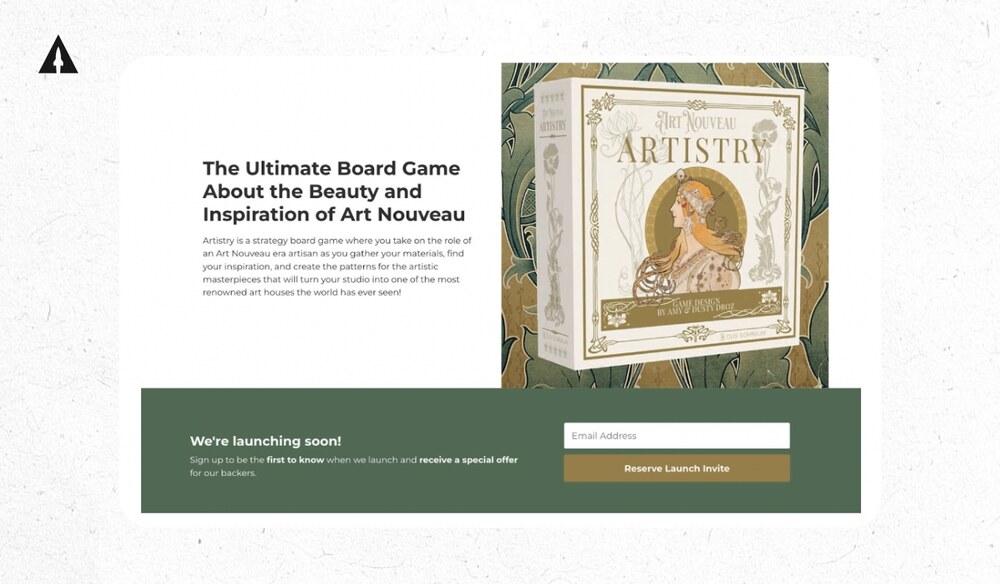
Before your Kickstarter page exists, you need somewhere to send interested people so they don't just disappear. A simple landing page with your product, a short explanation of what it solves, and an email signup form is the foundation of everything else in this guide.
The page doesn't need to be elaborate. It needs three things: a clear one-line description of the product, a few strong images or a short video, and a signup form promising early access, a launch-day discount, or first notification when you go live.
The strongest incentive is usually a small, real reward: early-bird pricing available only to people who back within the first 24 hours, a limited bonus item, or simply "be the first to know when we launch." Avoid vague incentives like "exclusive updates" — people need a concrete reason to hand over their email.
Turn Your Landing Page Into a Reservation Funnel
A plain email signup tells you who's curious. It doesn't tell you who's actually going to back you. That distinction matters more than it sounds — a list of 2,000 curious emails can convert far worse on launch day than a list of 300 people who've already shown they're willing to put money down.
This is the idea behind a reservation funnel, a pre-launch structure popularized by crowdfunding marketing agency LaunchBoom: instead of stopping at "give me your email," you ask interested visitors to reserve their spot with a small, fully refundable deposit — typically $1. Someone willing to hand over a dollar today is a dramatically stronger signal of a future backer than someone who only typed in an email address.
The four-step reservation funnel structure
The four stages are straightforward:
- Landing page — the same page you already built, collecting an initial email.
- VIP offer (the "reservation bridge") — right after signup, present a specific perk available only to people who back within the first day, unlocked by a $1 refundable deposit. This could be a discounted add-on, a bonus item, or guaranteed early-bird pricing.
- Checkout — a simple payment page to collect that $1.
- VIP community — after paying, invite them into a Facebook Group or Discord server where your most committed pre-launch supporters can interact with you and each other, building the kind of momentum that carries into launch day.
Everyone who pays the deposit becomes a "VIP" — the group you email first, message personally on launch morning, and count on to fund the opening hours of your campaign. Everyone who only gave an email stays in a warmer, but less certain, general list.
Once you know how many people have actually reserved a spot, you can estimate day-one funding with real numbers instead of guesswork — take your VIP count, apply a realistic conversion assumption, and multiply by your price point. That number is far more reliable for setting a funding goal than an email list where you have no idea who's actually going to pledge.
Building this yourself is entirely possible with standard landing page and checkout tools, or you can use dedicated pre-launch funnel software. For a full walkthrough of the exact reservation funnel mechanics, including real screenshots from a live example, see LaunchBoom's step-by-step reservation funnel guide — it's the clearest public breakdown of this specific tactic and worth reading in full if you want to set one up yourself.
Building Your Email List Before Launch
Your email list is the closest thing to a guaranteed audience you'll have on launch day — unlike social media followers, who may never see your post due to algorithmic reach, an email lands directly in someone's inbox.
-
1Drive traffic to your landing pageShare it with your personal network, relevant communities, and any existing audience you have — social media, a newsletter, or a personal blog.
-
2Segment as you growTag subscribers by how they found you (friends, ads, community, press) so you can tailor launch-day messaging later.
-
3Warm the list with updates, not silenceSend occasional behind-the-scenes updates — prototype photos, production progress, a founder story — so subscribers stay engaged rather than forgetting they signed up.
-
4Send a "we're launching" sequenceIn the final week before launch, send a short countdown sequence: one week out, 48 hours out, and the morning of launch with your live link.
| List Size at Launch | Realistic First-Day Contribution | Notes |
|---|---|---|
| Under 200 | Modest, but still helps seed early credibility | Combine with personal outreach for best results |
| 500–1,000 | Meaningful contribution to first-day goal % | A common benchmark founders aim for pre-launch |
| 1,000–5,000 | Can carry a large share of day-one funding alone | Usually built through paid pre-launch ads or existing following |
| 5,000+ | Often enough to fund a campaign within hours | Typically requires months of pre-launch audience building |
Drive Traffic to Your Funnel With Meta Ads
A landing page and reservation funnel only work if people actually see them. Once the funnel itself is built, Meta (Facebook and Instagram) ads are the most reliable way to put it in front of cold traffic that matches your product, well before your campaign is live to search or browse on Kickstarter.
Start with who, not what
Before writing a single ad, get specific about who would genuinely love your product. Give that person a name, a rough income, a set of hobbies, the brands they already buy, and the content they consume. This isn't a branding exercise for its own sake — those specific traits are exactly what you turn into Meta's interest-based targeting. A vague "outdoor enthusiasts" audience performs far worse than a tightly defined one built from real interests, brands, and media habits your ideal backer already engages with.
What makes a pre-launch ad actually convert
- Lead with the product, not the brand — a strong photo or short video of the product itself, ideally in use, stops the scroll better than a logo or abstract lifestyle shot.
- Send clicks straight into the reservation funnel — not just the landing page's first step, but toward the $1 VIP offer specifically, since that's the action that actually predicts backers.
- Track cost per reservation, not just cost per click — a cheap click that never reserves is worth far less than a slightly pricier click that does.
- Test multiple audiences and images before scaling spend — run several combinations at a small budget, find which pairing produces the lowest cost per $1 reservation, then increase spend on what's actually working.
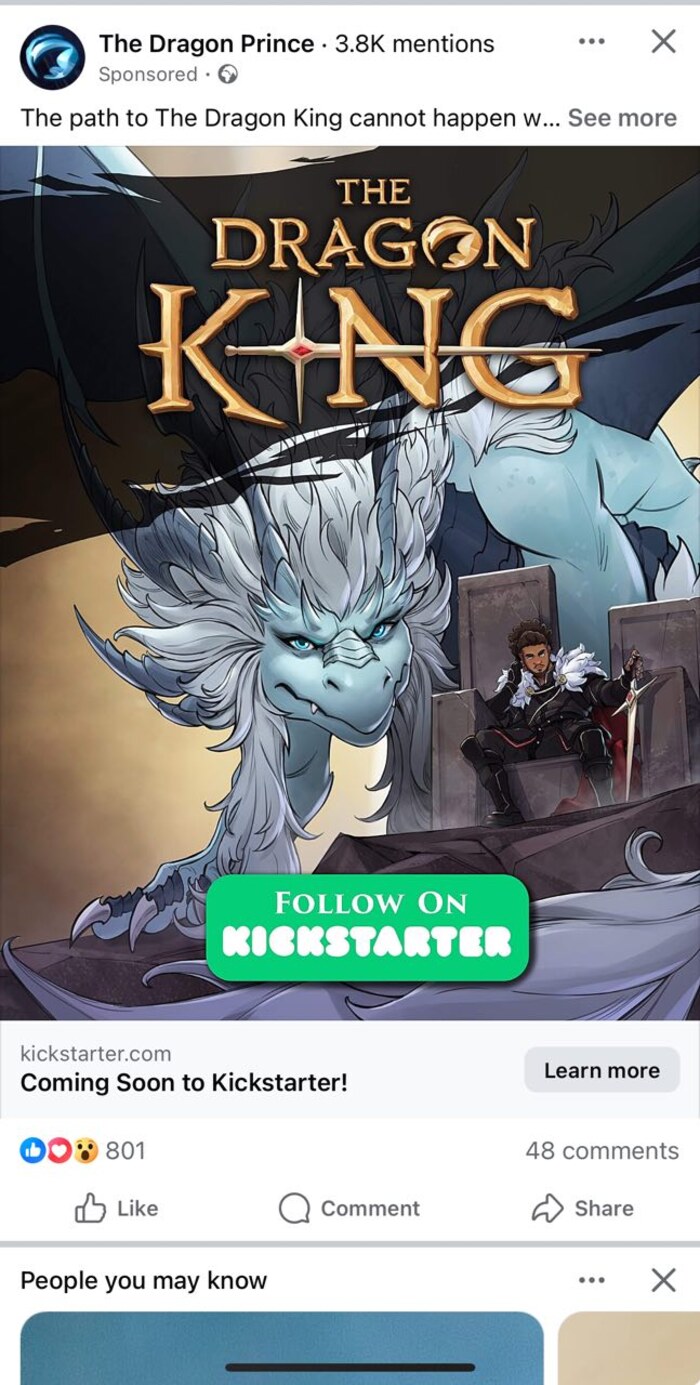
For a deeper walkthrough of Meta ad targeting and creative specifically for a pre-launch crowdfunding funnel, LaunchBoom's guide covers this step in more depth — see their Meta ads section for the full breakdown.
You don't need a large ad budget to start testing. A modest daily spend across two or three ad variations for a week or two is usually enough to see which creative and audience combination is producing reservations at a reasonable cost — then you scale what's working rather than guessing at a large budget from day one.
Collect Social Proof Before You Launch
A campaign page with zero backers and zero history is a harder sell than one that opens with visible momentum. Pre-launch is your chance to gather proof points you can reference the moment you go live.
- Waitlist size: "Over 1,200 people are already waiting for this" is a credible trust signal on your page.
- Prototype reactions: Short quotes or testimonials from people who tried an early version.
- Press or blog mentions: Even smaller niche outlets or relevant blogs add third-party credibility.
- Community engagement: Comments, shares, and reactions on your pre-launch posts show real interest, not just a page that exists.
If you're building a following specifically for launch-day reach, it's worth understanding how much followers actually convert compared to a warm email list — we cover that tradeoff directly in Kickstarter followers vs email lists: which one actually guarantees funding.
Engage Relevant Communities Early
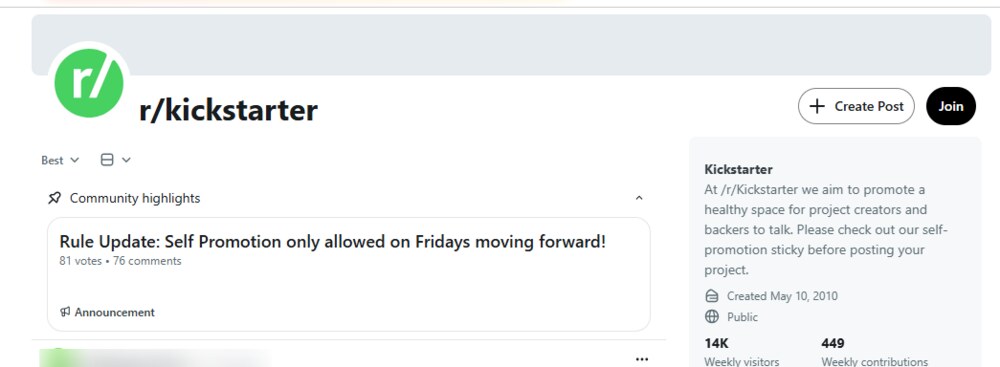
Depending on your product category, there are almost always existing communities of people already interested in what you're making — subreddits, Discord servers, Facebook groups, niche forums, or hobbyist communities. Joining these early, participating genuinely, and mentioning your upcoming project (where allowed) builds recognition before you ever ask for a pledge.
- Participating authentically for weeks before mentioning your product
- Asking for feedback on your prototype or concept, not just promoting
- Respecting each community's self-promotion rules
- Sharing genuine progress updates, not repeated asks
- Joining a group solely to post your landing page link immediately
- Ignoring community rules about self-promotion
- Posting the same message across many unrelated communities
- Disappearing after the first post instead of staying engaged
A 30-60 Day Pre-Launch Timeline
Here's a simple structure you can adapt depending on how much runway you have before launch.
| Timeframe | Focus | Key Actions |
|---|---|---|
| Day 60–45 | Foundation | Build landing page and reservation funnel, set up email tool, start joining relevant communities |
| Day 45–30 | Audience building | Drive traffic with Meta ads, start posting progress on social media |
| Day 30–14 | Momentum | Reach out to press/niche blogs, gather waitlist testimonials, consider a newsletter feature |
| Day 14–7 | Final push | Send countdown emails, finalize launch-day messaging, brief anyone helping you share |
| Day 1 (launch) | Activation | Send the "we're live" email, post everywhere, personally message your VIPs first |
For a deeper breakdown of exactly what makes Kickstarter's discovery and ranking systems respond to a campaign, our complete guide to how Kickstarter really works in 2026 is a useful companion read alongside this pre-launch plan.
Common Pre-Launch Mistakes
- Starting too late. A week of pre-launch marketing rarely produces a meaningful list.
- No clear signup incentive. "Join our list" alone converts far worse than a concrete early-bird offer.
- Collecting emails without a reservation step. An email-only list makes it far harder to know who's actually going to back you, which makes your funding goal a guess rather than a calculation.
- Going silent after the first landing page post. Momentum needs regular, light engagement, not one burst of activity.
- Treating pre-launch as separate from launch day. The whole point is that your list becomes your day-one activation plan.
- Ignoring community rules. One banned post in a relevant subreddit can cost you access to that entire audience.
Conclusion
Kickstarter pre-launch marketing isn't a separate task from your campaign — it's the reason your campaign has anyone to talk to on day one. A landing page turned into a reservation funnel, Meta ads driving cold traffic into that funnel, a warmed email list, some real social proof, and a few weeks of genuine community engagement turn launch day from a hopeful guess into a planned activation.
The campaigns that raise the most in their first 24 hours almost always did the quiet work weeks earlier. Start building that audience now, and by the time your campaign goes live, you won't be hoping people find you — you'll already know exactly who's going to back you first.