
Launching your first Kickstarter campaign is exciting, but it can also be unforgiving. Many creators spend months building the product, preparing visuals, and writing the campaign page, only to realize too late that the real challenge is not simply publishing the project. The real challenge is getting the right people to care before launch day.
Kickstarter works best when a campaign already has momentum. First-time creators often believe the platform will automatically bring backers, but that is rarely how strong campaigns are built. Kickstarter can help with discovery once a campaign is already moving — its algorithm rewards early velocity with organic visibility — but that first push has to come from somewhere you control: your email list, your community, your network, and the channels you have deliberately warmed up beforehand.
This guide is the complete playbook: validation, pre-launch audience building, email sequencing, reservation funnels, campaign page conversion, reward structure, launch day, paid ads, the mid-campaign slump, the final 72 hours, and what happens after you fund. It merges what actually moves the needle across dozens of real campaigns with a full 90-day plan you can follow start to finish.
Key Takeaways
- First-time creators should start marketing 60 to 90 days before launch, not after the campaign is live
- Your email list is usually more valuable than your Kickstarter follower count, because email gives you direct control over launch-day communication
- A $1 reservation funnel can help qualify potential backers before launch when used transparently and ethically
- Your campaign page should convert, not just explain — story, rewards, visuals, pricing, FAQs, and proof all matter
- The first 48 hours are critical because early funding velocity shapes both backer perception and Kickstarter's own algorithmic discovery
- The mid-campaign slump and the final 72 hours are both predictable phases with their own specific playbooks — not moments to improvise
- Post-campaign growth should be planned before the campaign ends, through pledge management, late pledges, and email retention
Why First-Time Creators Need Marketing Before Launch
A common mistake among first-time creators is thinking that Kickstarter itself is the marketing plan. In reality, Kickstarter is the platform. Your marketing strategy is what brings qualified backers to that platform in the first place.
Kickstarter uses an all-or-nothing funding model: a project must reach its funding goal by the deadline before any funds are collected. That structure protects backers, but it also means creators must generate enough momentum within a limited window. If the campaign starts slowly, it becomes harder to create the confidence, urgency, and visibility needed later — largely because Kickstarter's own discovery algorithm weighs early backer velocity heavily when deciding which campaigns to surface.
Kickstarter's discovery algorithm rewards campaigns that show strong early backer velocity — a high number of backers pledging in a short window, particularly the first 48 hours. A campaign that gets 50 backers in two days will get meaningfully more organic Kickstarter traffic than one that gets the same 50 backers spread over two weeks. This is exactly why pre-launch audience building is not optional — it's what fuels the day-one surge that earns you free platform exposure.
For a first-time creator, marketing should do three jobs before launch: validate that people actually want the product, build a warm audience, and prepare those people to act the moment the campaign goes live. Without this preparation, even a genuinely strong product can struggle to find its first hundred backers.
Strategy 1: Validate Demand Before Building the Full Campaign
Before you spend heavily on ads, video production, influencer outreach, or manufacturing assets, confirm that people actually want what you are launching. Validation is not the same as compliments — friends saying "this is cool" is not enough. You need evidence that strangers understand the value and are willing to take action.
Validation can come from email signups, survey responses, pre-launch page follows, comments from target communities, waitlist signups, product demo feedback, reservation deposits, or early purchase intent. The goal is to reduce guesswork before you commit your launch budget.
Practical validation questions
- Can people explain the product back to you in one sentence?
- Do they understand the problem it solves?
- Are they willing to join a waitlist or email list?
- Do they ask about price, shipping, specs, or launch date?
- Would they pay a small refundable reservation to secure a launch bonus?
- Do they share the product with friends without being pushed to?
Strategy 2: Build Your Pre-Launch Audience Early
The best Kickstarter campaigns do not begin on launch day. They begin weeks or months earlier. Your pre-launch audience is the group of people most likely to back you in the first few hours and days — the group that determines whether your launch reads as a surge or a trickle.
Kickstarter followers are useful because they create platform-native interest, but they should not be your only audience. You should also build an email list, a social audience, a community, and a retargeting pool outside Kickstarter. If you had to choose between 100 Kickstarter followers and 100 email subscribers, take the email list every time — Kickstarter controls the notification, and it is easily missed. See our full comparison of Kickstarter followers vs email lists for the complete breakdown.
| Asset | Why It Matters | Best Use |
|---|---|---|
| Email list | Direct communication before and on launch day | Launch announcement, reminders, segmentation |
| Kickstarter followers | Platform-native interest and discovery signals | Campaign launch notification |
| Retargeting audience | Warm traffic that already saw your product | Ads during launch and final 72 hours |
| Community | Trust, feedback, and repeat engagement | Organic momentum and user-generated content |
| PR / influencer list Launch week | Third-party credibility and reach | Launch week coverage and social proof |
Create content that educates, not just promotes
In the 60 to 90 days before launch, create content about the problem your product solves — not content about the product itself. If your product is a smart pillow that improves sleep, write about sleep quality and common frustrations with existing solutions. This kind of content attracts people who are already interested in the topic, meaning they are pre-qualified for your campaign before you have even mentioned it.
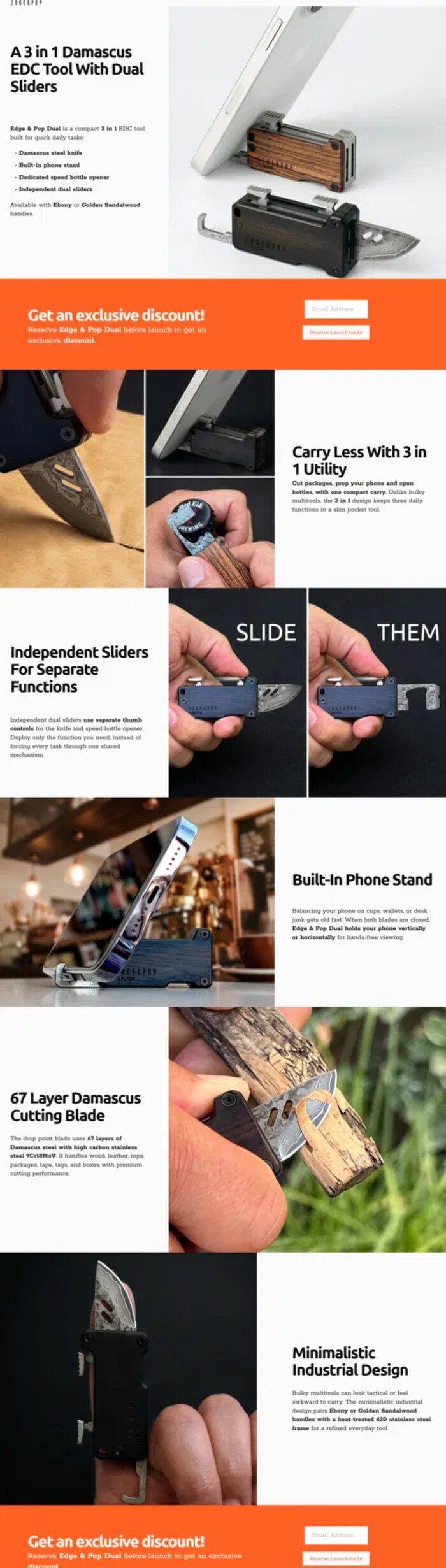
↕ scroll to see the full page — a real pre-launch landing page focused on the product's utility before asking for a signup
Strategy 3: Use Email Marketing as Your Launch Engine
Email is one of the most important assets for first-time creators because it gives you direct control. Social platforms can limit reach, algorithms change, and followers miss posts — but email lets you speak directly to people who already showed interest.
Your list should not receive only one announcement on launch day. It should be warmed up with a sequence that educates, builds anticipation, and prepares subscribers to act the moment the campaign goes live.
Recommended pre-launch email sequence
- Email 1 — The founder story: why you are building this project
- Email 2 — The problem: what frustration or need the product solves
- Email 3 — The product: what makes it different and why it is useful
- Email 4 — The proof: prototype, reviews, demos, press, or community feedback
- Email 5 — The launch date: when the campaign goes live and why early support matters
- Email 6 — Launch day: a direct call to action to back the project
- Email 7 — Momentum update: thank supporters and show progress
- Email 8 — Final reminder: use the deadline and reward availability honestly
Strategy 4: Consider a $1 Reservation Funnel Carefully
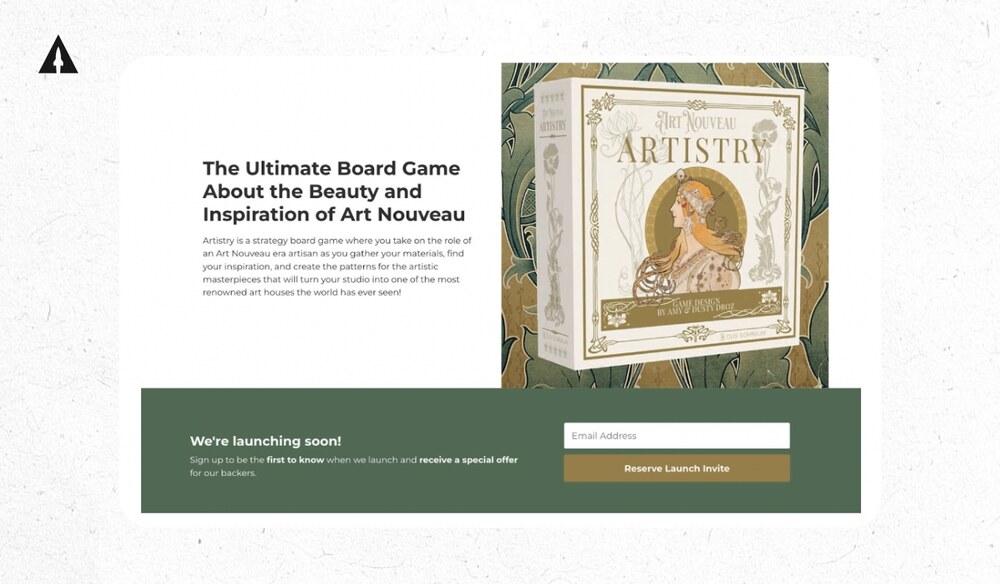
One of the most discussed Kickstarter pre-launch strategies is the refundable reservation funnel. LaunchBoom popularized the $1 reservation approach, where interested people submit their email and then place a small refundable deposit to reserve a bonus, discount, or launch incentive.
The logic is simple: someone who puts down even a small amount is usually more committed than someone who only enters an email address. LaunchBoom has publicly written that $1 reservers were dramatically more likely to back than people who did not reserve. That does not mean every creator should copy the strategy blindly, but it shows why commitment-based funnels are powerful when used responsibly.
For first-time creators, the real lesson is not "charge people $1." The real lesson is qualification — you need a way to separate casual interest from serious intent before launch.
How to use a reservation strategy ethically
- Make the reservation refundable, and say so clearly
- Clearly explain what the backer receives for reserving
- Show the expected Kickstarter price before asking for a reservation
- Avoid manipulative scarcity or fear-based language
- Do not overpromise rewards you cannot realistically deliver
- Use the data to understand demand, pricing, and audience quality
Strategy 5: Create a Campaign Story People Actually Care About
Backers do not only support products — they support stories, missions, and creators they trust. Your campaign story should make people understand why the project matters and why now is the right time to support it.
A weak story says: "We made a product. Please back us." A stronger story says: "We saw this problem, built this solution, tested it with real people, and now we need early supporters to help bring it to life." Keep the story personal but still practical — explain the origin, the problem, the product, the proof, the risks, and what happens if the campaign succeeds.
"A weak campaign explains what the product is. A strong campaign explains why the backer's support, specifically, matters right now."
Campaign story framework
- The problem: what pain point or desire does the project address?
- The founder: why are you the right person or team to build it?
- The solution: what exactly are you launching?
- The proof: what prototype, testing, reviews, or traction do you have?
- The goal: why do you need crowdfunding specifically?
- The invitation: why should backers join now, not later?
Strategy 6: Optimize Your Campaign Page for Conversion
Your Kickstarter page is not just a brochure. It is your sales page, trust page, FAQ page, and conversion page all in one. First-time creators often spend too much time making the page "look nice" and not enough time making it easy to back.
A good campaign page quickly answers the questions every backer has: What is it? Why should I care? Is it real? Can I trust this creator? What do I get? When will I get it? What are the risks?
Page optimization checklist
- A clear headline that explains the product value quickly
- A strong hero image or video thumbnail that reads clearly even as a small browse-page thumbnail
- A short campaign video that opens with the problem, not the branding — introduce the product within ten seconds
- Benefits explained before technical details
- A simple reward comparison section with one obvious "best value" tier
- Prototype proof, demos, testimonials, or press mentions
- A manufacturing and fulfillment explanation
- A transparent risks and challenges section
- An FAQ section that removes objections before they're asked
- Repeated CTA reminders woven naturally into the story
To measure whether your page is actually working, divide total backers by total page visits. Anything below 1% signals a page problem rather than a traffic problem — and no amount of extra traffic fixes a page that does not convert.
Strategy 7: Build Reward Tiers That Make Backing Easy
Reward tiers can make or break a first-time campaign. If the pricing is confusing, shipping is unclear, or there are too many options, backers hesitate. Your goal is to make the decision simple — one obvious "best value" tier, early-bird pricing used carefully, and shipping timelines that are realistic rather than optimistic.
| Tier Type | Purpose | Example |
|---|---|---|
| Low-cost support | Lets people support even if they cannot buy the main product | $5 thank-you / digital update |
| Early bird Momentum driver | Rewards fast action and builds launch-day momentum | Limited first-backer discount |
| Core reward | The main product offer | One unit of the product |
| Bundle | Increases average pledge value | Two-pack or family pack |
| Premium tier | Adds value for superfans | Signed edition, accessory bundle, creator call |
Strategy 8: Build a Community Before Launch Day
A community gives your campaign something ads cannot fully replace: trust. When people feel involved before launch, they are more likely to comment, share, back early, and defend the project when questions appear.
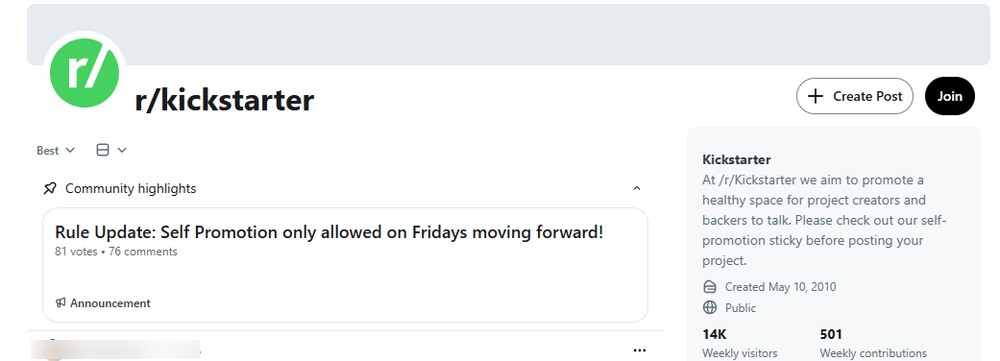
Community does not have to mean a huge Discord server. It can be a small group of engaged people who care about the product category. For games, Discord and Reddit may work well. For design products, Instagram, TikTok, YouTube, and Facebook groups may be better. For professional tools, LinkedIn communities may perform better. See our full guide on building a community that supports your crowdfunding campaign for a channel-by-channel breakdown.
Find where your backers already gather
Every product category has a community of people who are passionate about it. Find three to five communities where your exact audience spends time, and start participating genuinely — not promoting, just contributing. Spend 30 to 60 days answering questions and sharing useful information before you ever mention your campaign. When you do post about it, you're a community member sharing something you built, not a stranger dropping a link.
Strategy 9: Use Social Proof Before You Have Funding
First-time creators often think social proof only starts after the campaign raises money. That is not true. You can build social proof before launch through testimonials, prototype feedback, influencer reactions, waitlist numbers, press mentions, product demos, community comments, and founder credibility. The more proof you can show, the less risky the campaign feels to a new backer.
Useful pre-launch proof assets
- Prototype videos and product demos
- Beta tester comments
- Email waitlist numbers
- Reservation numbers, if you use a transparent reservation funnel
- Press mentions or blog coverage
- Influencer reactions
- Community polls and feedback
- Manufacturing partner or fulfillment preparation details
Strategy 10: Plan Your First 48 Hours Like a Launch Event
The first 48 hours can shape the campaign's entire perception. Backers want to feel that a campaign is moving. Creators want early funding velocity, comments, shares, and momentum — and as covered above, Kickstarter's own algorithm is watching this window closely too.
Do not wake up on launch day wondering what to post. You should already have your launch emails, founder post, social graphics, influencer messages, PR outreach, community announcements, and retargeting audiences ready to go.
-
1Send your launch email to your warm list firstA personal, direct message — not a marketing blast — announcing the campaign is live and asking for support today, specifically.
-
2Post founder announcements on every active channelSocial media, communities you've participated in, and anywhere your pre-launch audience has been gathering.
-
3Message reservation holders or warm leads firstThese are your most qualified backers — reach out individually, not through a group blast.
-
4Ask close supporters to back early, not "sometime later"The visible backer count is social proof for every stranger who visits afterward — 40 backers on day one reads very differently than 4.
-
5Notify press, bloggers, newsletters, and influencersAnyone you've pre-briefed should receive the live link the moment the campaign goes public.
-
6Retarget pre-launch visitors and email clickersAnyone who engaged before launch but didn't convert should see a retargeting ad the moment the campaign is live.
Strategy 11: Use Paid Ads Carefully and Retarget Warm Traffic
Paid ads can help Kickstarter campaigns, but first-time creators must be careful. Ads are not magic — cold traffic is expensive when your page, offer, pricing, or funnel is weak.
The best use of paid ads before launch is usually audience building and validation: driving people to a landing page, collecting emails, testing messaging, testing visuals, and identifying which audiences respond. During the live campaign, ads typically work best when retargeting warm audiences — people who visited the campaign page, clicked email links, watched videos, engaged with posts, or joined the waitlist.
Meta's algorithm needs three to five days of data before it can reliably optimize for your target audience, which means starting a low-budget warm-up campaign roughly two weeks before launch builds a retargeting pool that's ready the moment the campaign goes live — rather than spending your critical first days in the ad platform's learning phase.
Paid ad principles for first-time creators
- Do not spend heavily before validating your messaging
- Use ads to test hooks, audiences, and product angles before launch
- Build retargeting audiences before the campaign goes live
- Track cost per email subscriber and cost per reservation if using a funnel
- Do not judge ads only by clicks — judge by qualified intent
- Concentrate retargeting spend in the first 48 hours and final 72 hours
| Channel | Audience Temperature | Time to Results | Starting Cost | Best For |
|---|---|---|---|---|
| Email list (own) | Hottest | Immediate | Free (if built pre-launch) | Launch day |
| Newsletter promotion | Warm | Same day as send | From $250 | Launch + mid-campaign |
| Community (Reddit/Facebook) | Warm | Hours to days | Free (time only) | Throughout campaign |
| Meta retargeting ads | Warm | 1–3 days | $20–$40/day | Mid-campaign + final stretch |
| Meta prospecting ads | Cold | 3–5 days to optimize | $50–$100+/day | Campaigns with $50K+ goals |
| PR / influencer outreach | Varies | Unpredictable | Time or $1,000+ | Products with strong visual story |
Strategy 12: Use PR, Influencers, Newsletters, and Communities
Kickstarter marketing should not depend on one channel. First-time creators need a mix of owned, earned, and paid attention. PR gives credibility, influencers give access to relevant audiences, and newsletters place your campaign directly in front of backer communities who are actively looking for something new to fund.
Outreach targets to prepare before launch
- Niche blogs and publications covering your product category
- YouTube reviewers and TikTok creators
- Relevant newsletters and curated product-discovery emails
- Podcasts in your category
- Reddit communities, if their rules allow campaign sharing
- Facebook groups and Discord servers where you've built trust
- Local press, if your founder story or product has a local angle
Not all crowdfunding newsletters are equal — before booking a placement, verify the subscriber count with real evidence, ask about open rates (a healthy niche newsletter runs 25–40%+), and check whether the newsletter reviews campaigns editorially or accepts everything that pays. Our full Kickstarter newsletter promotion guide covers exactly what to expect from each placement type, and our honest look at whether newsletter promotions are actually worth it is essential reading before your first placement.
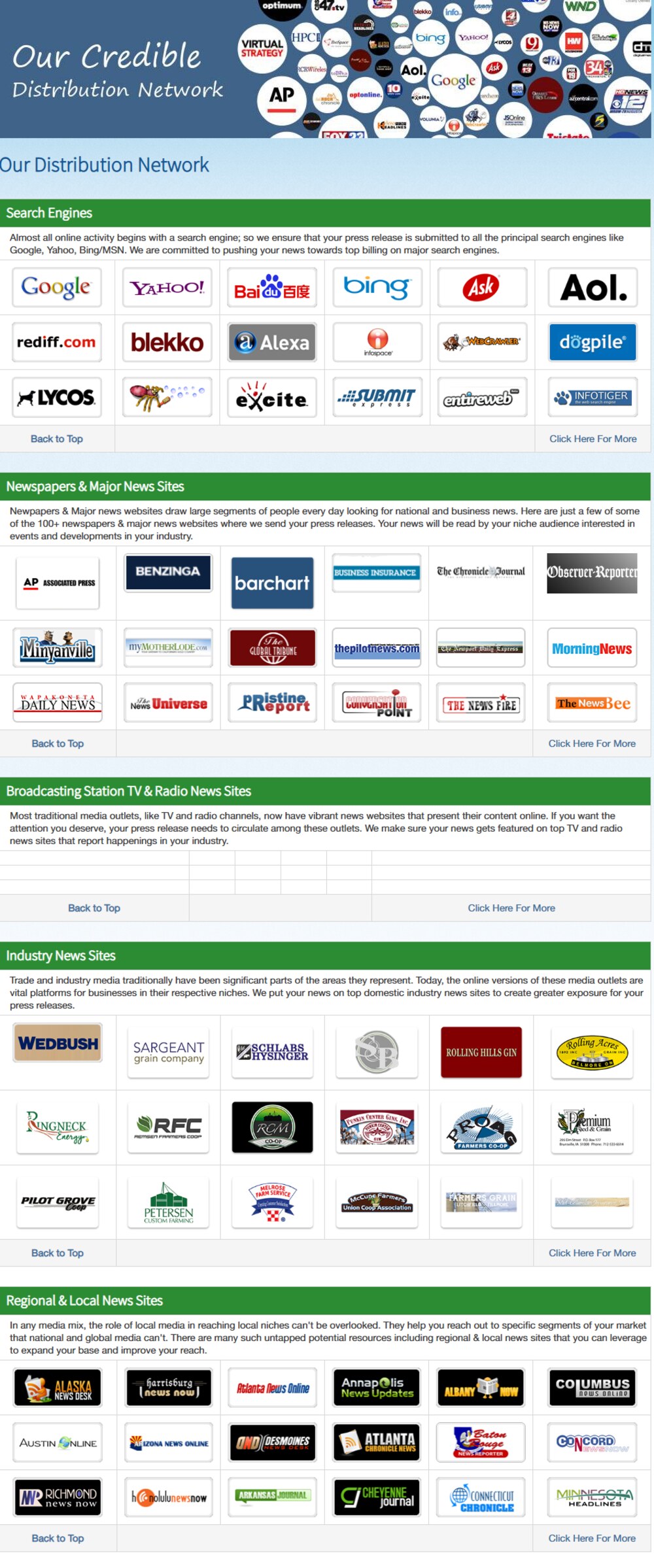
↕ scroll to see the full distribution network — search engines, major news sites, industry publications, and regional outlets
Strategy 13: Keep the Campaign Alive With Updates
A Kickstarter campaign is not finished after launch day. The middle of the campaign — often called the mid-campaign slump — is where many first-time creators lose momentum, and it is one of the most predictable patterns in crowdfunding. It happens because your personal network has been exhausted and organic Kickstarter traffic alone is rarely enough to sustain interest on its own.
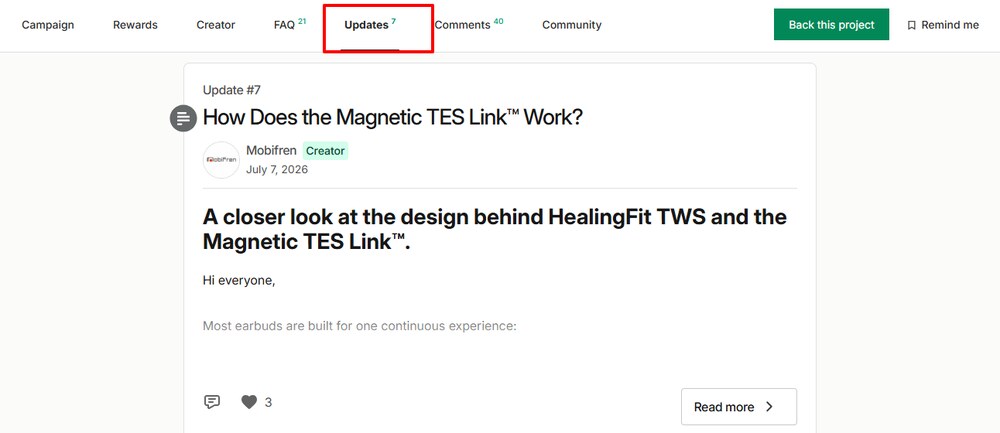
Regular updates keep backers engaged and give non-backers new reasons to return. They should not be empty announcements — they should build trust, answer questions, show progress, and create reasons to share.
Campaign update ideas
- A thank-you update after the first funding milestone
- A behind-the-scenes product development update
- A stretch goal explanation
- A backer question roundup
- A press or influencer coverage update
- A manufacturing or fulfillment preparation update
- A final week reminder
- A final 48-hour urgency update
The most practical ways to fight through the slump are a newsletter placement (which can be booked and live within 24–72 hours), a focused push into two or three new communities you haven't yet targeted, and, if you're already running ads, increasing retargeting spend during this window. For a complete mid-campaign plan, see our guide on promoting a live Kickstarter campaign that isn't getting backers.
The final 72 hours, meanwhile, reliably produce the second-biggest traffic and pledge spike of the entire campaign, after launch day itself — pure deadline psychology. People who were interested but not yet committed tend to make a decision once they see a real deadline closing in. This is the moment for a final update to all existing backers, a newsletter placement timed to the final 48–72 hours with urgency messaging, increased ad spend if you're already running ads, and one more genuine post in every community you've participated in.
"The final 72 hours are not the time to rest. They are the second-biggest marketing window of your entire campaign — treat them like day one."
Strategy 14: Plan Post-Campaign Growth From Day One
First-time creators often treat funding as the finish line. It is not. Funding is the start of fulfillment, customer experience, and long-term brand growth.
Kickstarter has expanded its post-campaign tools — Pledge Manager, add-ons, shipping and tax support, and features like Pledge Over Time — that can help creators manage backer logistics, increase revenue, and improve transparency after funding. But creators still need a plan for communication, delivery, and the eventual transition to ecommerce.
Before launch, decide what happens after the campaign: will you use Kickstarter's native tools, a dedicated pledge manager, a Shopify store, Indiegogo Late Pledge, email retention campaigns, or a full post-campaign ecommerce setup? The answer affects your rewards, pricing, shipping, production, and backer communication from day one. Our guide on turning Kickstarter backers into long-term customers covers this transition in detail.
The 90-Day Kickstarter Marketing Plan for First-Time Creators
Here is the entire system laid out on a timeline, so you know exactly what to be doing at every stage between today and your final 72 hours.
| Timeline | Main Goal | What to Do |
|---|---|---|
| 90 days before launch | Positioning and validation | Define audience, test messaging, collect feedback, validate price and demand |
| 75 days before launch | Build pre-launch funnel | Create landing page, email capture, retargeting pixels, and content calendar |
| 60 days before launch | Audience building | Run organic content, ads, community outreach, newsletter signup, and PR research |
| 45 days before launch | Proof and assets | Finalize video, images, prototypes, reward tiers, testimonials, and campaign story |
| 30 days before launch | Warm-up sequence | Begin email warm-up, social countdown, founder story posts, and influencer outreach |
| 14 days before launch | Launch preparation | Confirm launch email, PR list, ad audiences, community posts, and close supporter list |
| Launch day Critical | Momentum | Send email, activate warm audience, post across channels, and push first backers early |
| First 48 hours | Social proof | Share milestones, answer comments, retarget visitors, and thank backers publicly |
| Mid-campaign | Sustain attention | Use updates, PR, creators, community engagement, and new content angles |
| Final 72 hours | Urgency | Send reminders, retarget warm traffic, highlight the deadline, and push final rewards |
Common Mistakes First-Time Creators Make
Having worked with campaigns across Kickstarter, Indiegogo, and Wefunder at Boostfunders, these are the patterns that consistently separate campaigns that fund from campaigns that stall. For a deeper breakdown of failure points, this guide covers 10 common reasons crowdfunding campaigns fail with specific fixes for each, and our breakdown of what a Kickstarter marketing agency actually does is worth reading before committing to any marketing spend beyond individual channels.
- Launching with no audience and expecting Kickstarter to bring all the backers
- Treating followers as equal to buyers without ever testing real intent
- Building a beautiful page that doesn't answer backer objections — trust and clarity beat polish
- Making reward tiers too complicated, causing decision paralysis
- Ignoring shipping, taxes, manufacturing, and fulfillment costs until after funding
- Running ads without a funnel or retargeting plan behind them
- Using weak storytelling that focuses only on features, not the problem or the founder
- Not preparing launch-day emails and posts in advance, then scrambling on the day itself
- Stopping communication after the first week, letting the mid-campaign slump win
- Not planning post-campaign customer retention or fulfillment strategy before the deadline hits
A Realistic First-Campaign Marketing Budget
Many first-time creators assume they need a large marketing budget to compete. The reality is more nuanced — the channels that convert best for first-timers (email list, community engagement, and newsletter promotion) are either free or accessible for a few hundred dollars. Here's a realistic breakdown for a first campaign targeting a $15,000 to $30,000 goal.
| Activity | Estimated Cost | When |
|---|---|---|
| Landing page + email tool | $0–$20/month | 60–90 days pre-launch |
| Content creation (own time) | Free | 60–30 days pre-launch |
| Community building | Free (time) | 60 days pre-launch to close |
| Newsletter placement (Shared Feature) | $250 | Launch week or mid-campaign |
| Newsletter placement (Dedicated) | $500 | Final 72 hours |
| Meta retargeting ads | $200–$400 total | Mid-campaign to close |
| Total | $950–$1,170 | Full campaign |
This budget is achievable for most first-time creators and covers the most reliable channels. Paid prospecting ads, influencer outreach, and PR are all worth considering for campaigns with larger goals — but they're additions to this foundation, not replacements for it.
How Boostfunders Helps First-Time Kickstarter Creators
Boostfunders helps first-time creators move from idea to funded campaign with a strategy built around audience, messaging, momentum, and conversion — pre-launch audience building, email list growth, Kickstarter follower strategy, campaign page optimization, paid ads, PR outreach, newsletter promotion, community marketing, launch-day planning, retargeting, and post-campaign growth.
Conclusion
The best Kickstarter marketing strategy for first-time creators is not one single tactic. It is a system. You validate demand, build a warm audience, create a strong story, optimize the campaign page, structure rewards clearly, prepare your first 48 hours, use email and retargeting, build community, and keep communication alive throughout the campaign — including through the mid-campaign slump and the final 72 hours.
LaunchBoom's $1 reservation strategy is a useful example of how creators can qualify demand before launch, but the deeper lesson is that serious intent matters more than surface-level attention. A big list is not enough if the audience is not ready to back.
If you are launching your first Kickstarter, do not wait until launch day to start marketing. Start early, build trust, and treat your campaign like a launch event supported by a real system — not a single page and a hope that people find it. If you'd like your campaign reviewed and put in front of active backers through our curated newsletter, submit your campaign here — we review every submission within 2 hours.